
 MOENV commends outstanding local governments for advancing circular economy with 3.4 billion kWh annual waste-to-energy generation, 100% circular utilization of incineration recycled aggregates
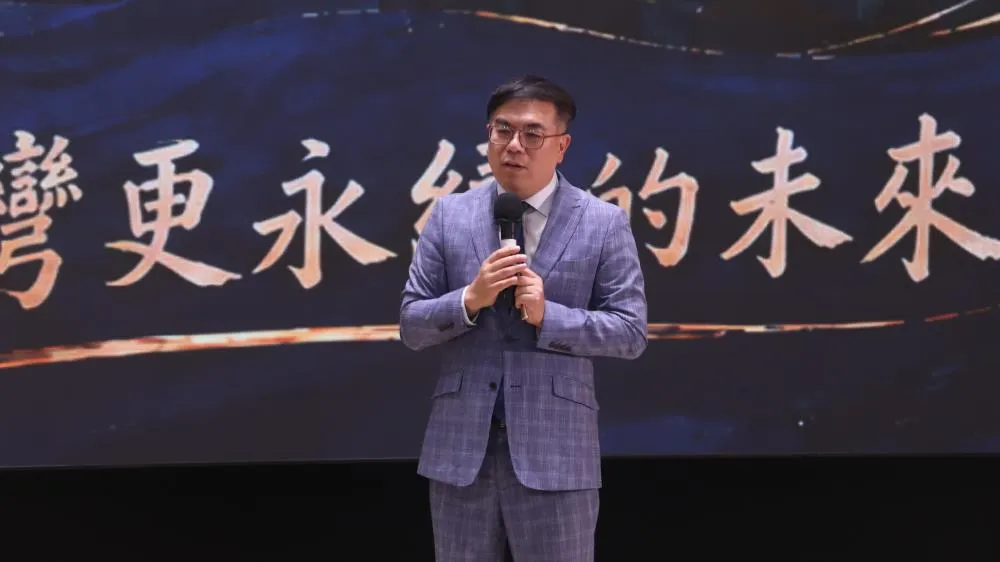
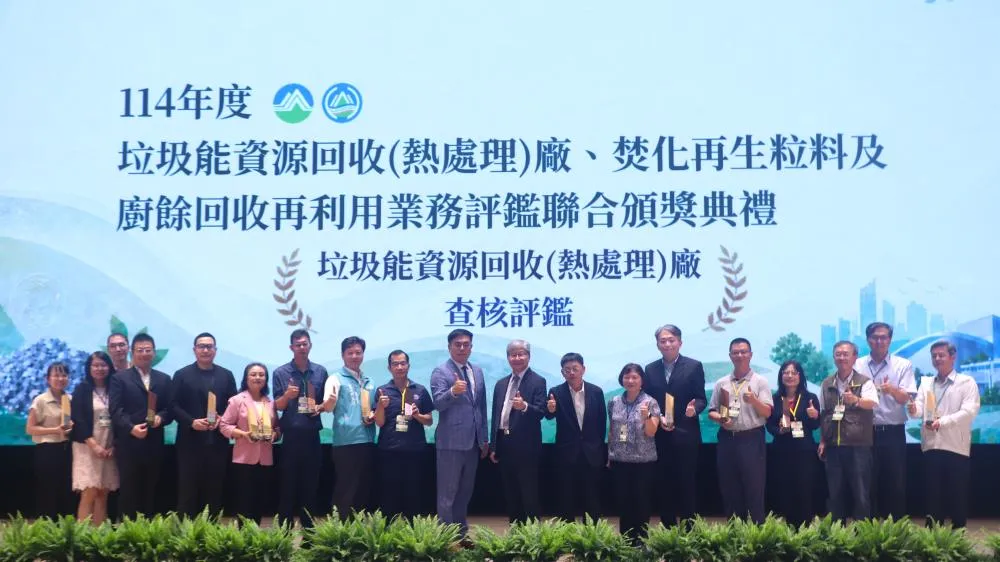
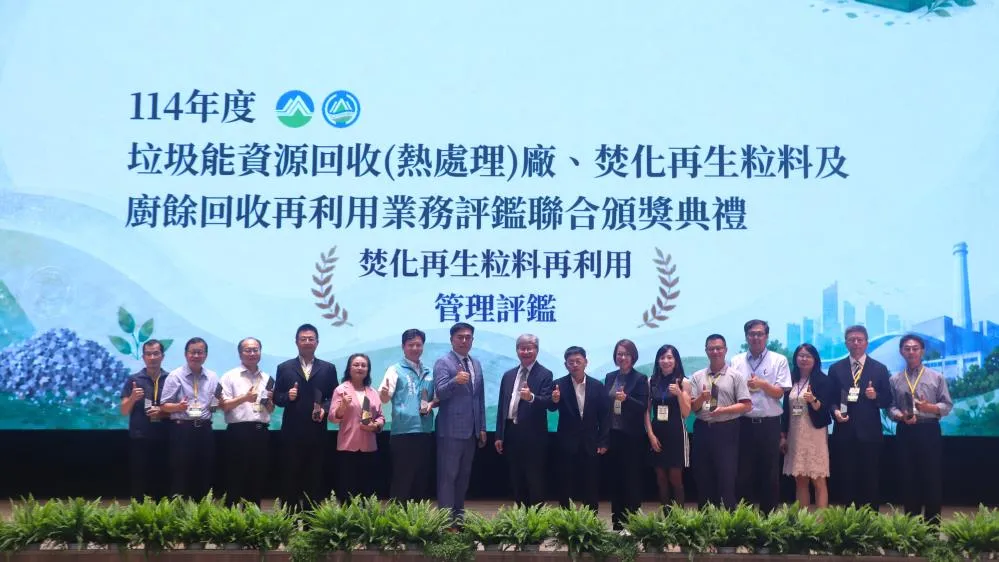
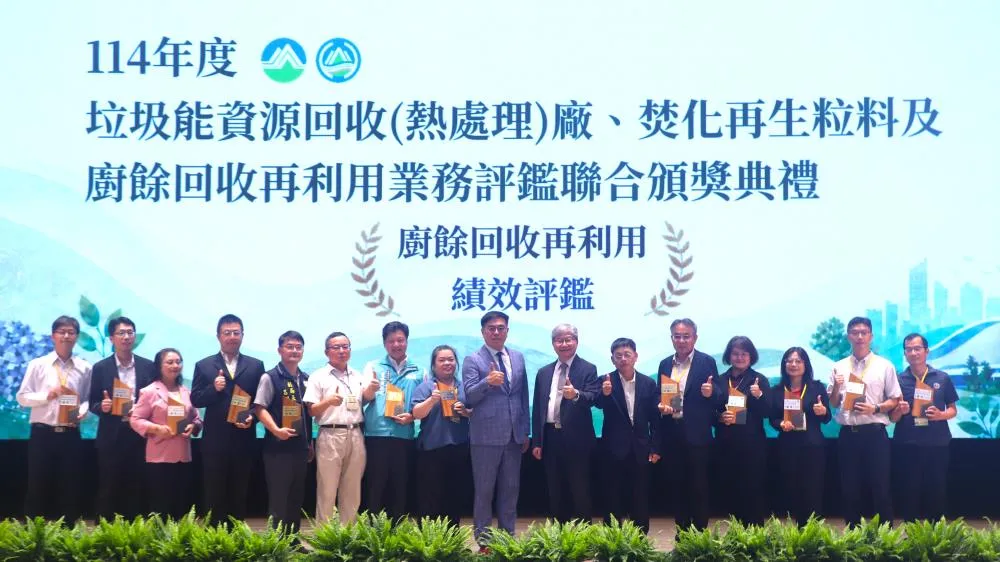
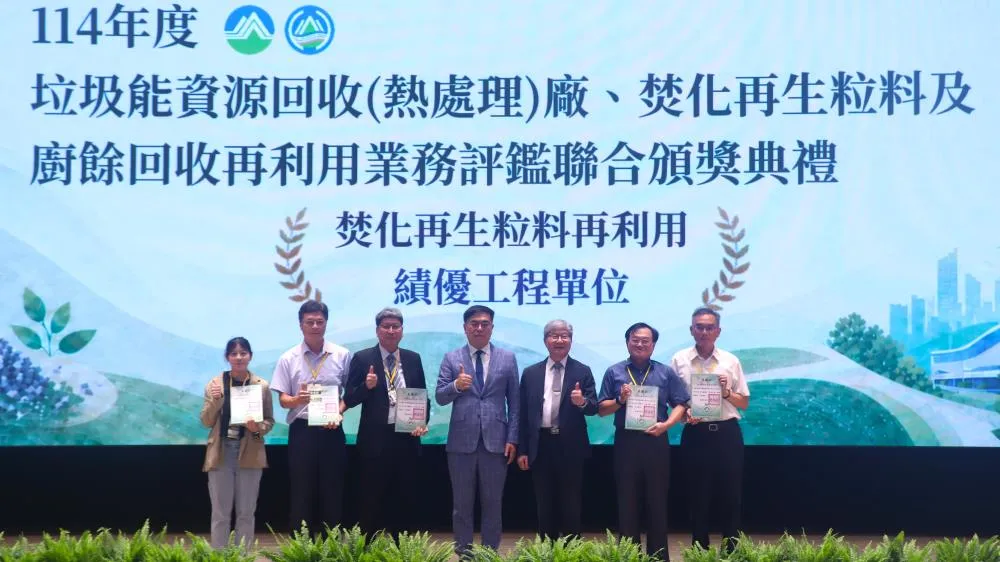
In response to global climate change and the trend toward net-zero transition, Taiwan’s environmental governance has gradually evolved from traditional end-of-pipe treatment into an integrated model that promotes both resource circulation and carbon reduction. The Ministry of Environment (MOENV) held a joint awards ceremony on June 24 to recognize outstanding performers in national waste thermal treatment, incineration recycled aggregate utilization, and food waste recycling and reuse for 2025, honoring the long-term dedication of frontline environmental professionals to safeguarding environmental quality.
The MOENV said that modern waste treatment facilities are no longer merely waste disposal sites, but “critical national environmental infrastructure” that supports the normal functioning of society. Whether responding to the threat of African swine fever, where local governments promptly coordinate with the central government to implement cross-regional food waste dispatch, or rapidly engaging in environmental cleanup after storms, environmental protection personnel across the country consistently respond swiftly, leveraging facilities to safeguard public health and environmental hygiene.
In terms of waste thermal treatment plant operations and management, the nationwide average operating rate of waste treatment facilities exceeded 85% last year, with annual processing volume surpassing 6.25 million metric tons. Electricity generation reached a record high of 3.4 billion kWh, sufficient to meet the annual electricity demand of approximately 830,000 households nationwide. Through the introduction of next-generation air pollution control technologies, facilities have reduced nitrogen oxides emissions, a key indicator, by an average of 25% over the past five years, balancing environmental protection with energy recovery. In addition, to prevent the spread of African swine fever, facilities have not only fully implemented food waste acceptance guidelines but also adopted higher self-imposed standards by initiating additional dioxin testing. Test results confirmed that overall operations and epidemic prevention measures remain safe and compliant.
In this evaluation, the Environmental Protection Bureaus of Changhua County and Miaoli County demonstrated outstanding waste governance and planning capability, implementing regional cooperation and resource integration, and were awarded the highest distinction. The Xindian Plant and Shulin Plant in New Taipei City, along with the Chiayi County Sustainable Circulation Center, also received top honors for their strong operational performance, pollution control effectiveness, and continued equipment upgrades.
In promoting the circulation of incineration recycled aggregates, strict quality control by local governments and leadership by public works projects have enabled the national recycling rate to reach 100% for three consecutive years. Among them, New Taipei City achieved the highest recycling volume nationwide through the establishment of Smart Resource Center and the strengthened implementation of local regulations. Changhua County improved aggregate quality through source control and guided processing plants to obtain carbon footprint label certification; both were awarded top honors. In addition, engineering organizations such as Taiwan Power Company, the National Land Management Agency of the Ministry of the Interior, Taiwan International Ports Corporation, the National Science and Technology Council, and Chunghwa Telecom were publicly recognized for actively using incineration recycled aggregates to implement resource circulation, with appreciation for their demonstration role.
In terms of food waste recycling, the MOENV has successfully prevented the spread of African swine fever in recent years, through the establishment of monitoring systems and enhancement of reuse mechanisms. In response to the policy fully banning the use of food waste for pig feeding starting in 2027, public composting plants have obtained 17 fertilizer registration certificates, ensuring both the quality of compost products and proper channels for utilization. In this evaluation, Taoyuan City, Chiayi County, Miaoli County, and Kinmen County were awarded the outstanding performance award for their achievements in developing diversified food waste treatment models, transforming food waste into renewable energy and valuable resources.
The MOENV emphasized that achievements in waste thermal treatment, circular use of incineration recycled aggregates, and diversified food waste reuse all demonstrate Taiwan’s continued efforts in advancing circular economy and environmental sanitation. Moving forward, it will continue to enhance governance and technologies in smart management and net-zero carbon reduction, working alongside local environmental protection authorities to jointly establish a solid foundation for sustainable national development.
- Data Source: Environmental Management Administration
- Publish Date: 2026-06-24
- Update Date: 2026-07-22