
 Related Topics
 Pollution Site Information Transparency
The Soil and Groundwater Pollution Remediation Fund Management Board (hereinafter referred to as the "Management Board") lists sites that affect normal land use or pose threats to public health and the living environment, according to the Soil and Groundwater Pollution Remediation Act. In 2002, the Soil and Groundwater Pollution Remediation Website was launched, allowing the public to learn about the Management Board's functions, relevant regulations, and achievements of soil and groundwater-related initiatives. The website also provides an Online Display Query for Site Information, which offers two main features: the Thematic Visualization of Site Information summarizes key national site data into five themes, enabling citizens to access essential site data efficiently; the Listed Site Search allows users to search by county and city, pollution type, pollutant type, and specific address to gain insight into the quality of soil and groundwater in their vicinity. Please refer to the following image for relevant interfaces.
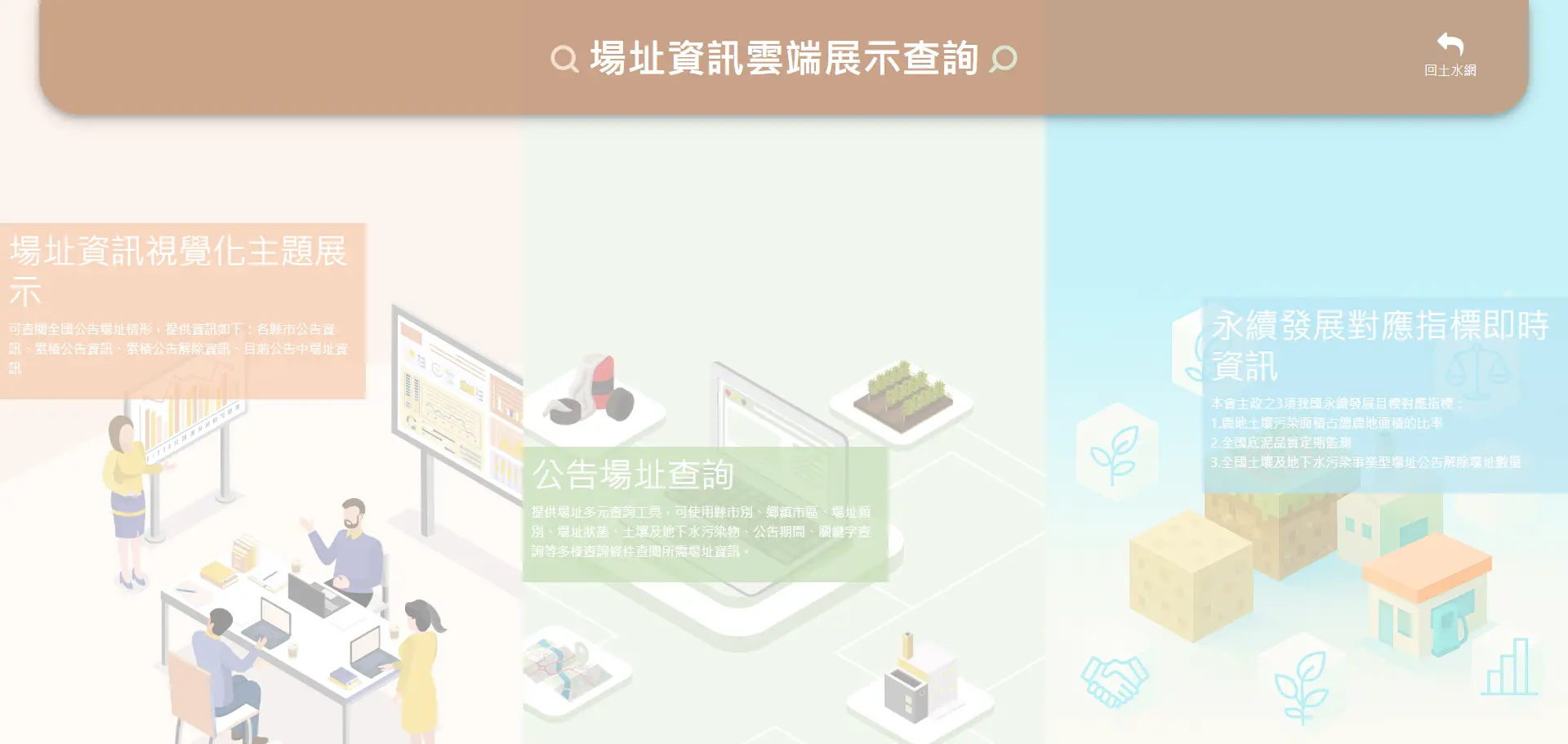
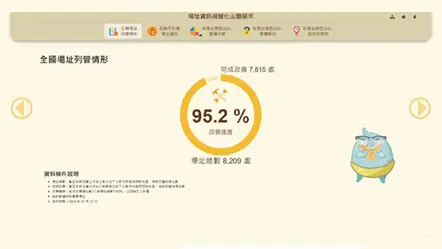
Since its establishment in 2001, the Management Board has accumulated over 20 years of data on listed sites. To make data on relevant sites more accessible, the website organizes the information into five main thematic queries, including National Site Listing Status, Site Information by County and City, Percentage of Sites by Type—Cumulative Listings, Percentage of Sites by Type—Cumulative Delistings, and Percentage of Sites by Type—Currently Listed. These visualizations allow the public to quickly understand relevant works and results. Citizens who wish to learn about site improvement efforts in their county or city can use the interactive query feature in Site Information by County and City, selecting their county or city on a map to view the latest site listing statistics. For more information, please refer to the Online Display Query for Site Information.
To meet different public information needs, users can perform simple queries by entering keywords such as county and city names or addresses. For advanced queries, users can refine their search by selecting pollutants and other factors, with nine search criteria available to accommodate various site inquiry needs.
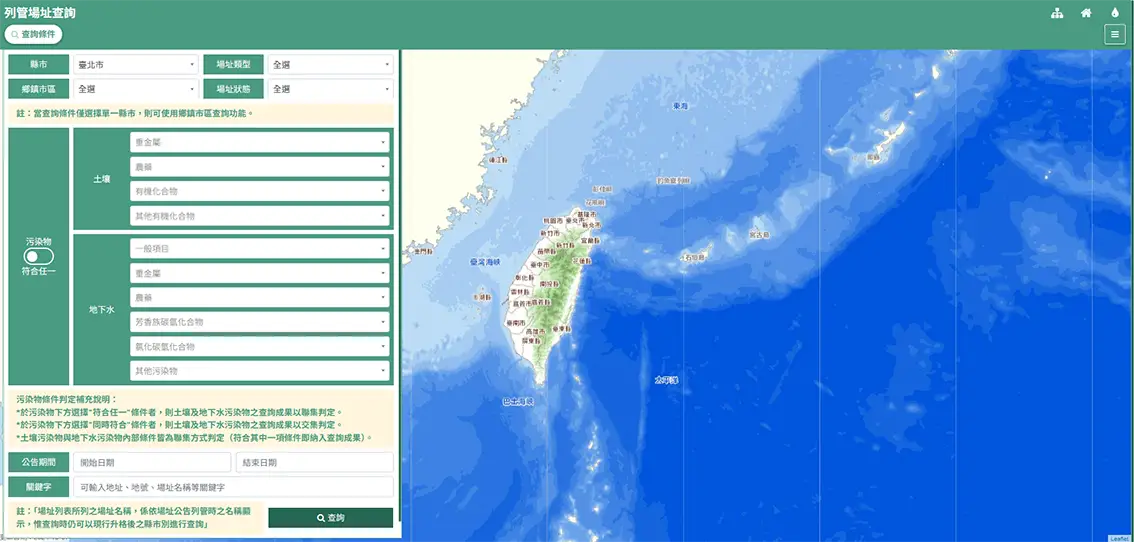
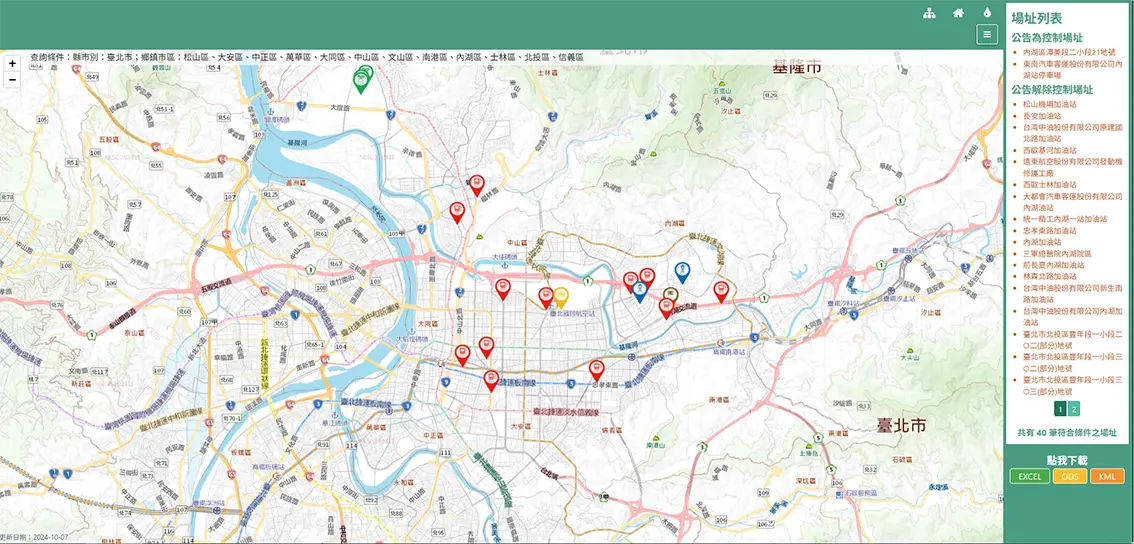
After setting search criteria, the results are shown on a map, allowing for geographic confirmation. Additionally, a list of sites that match the search criteria is displayed and sorted by site status, making it easier for users to locate specific sites. For more detailed site information, users can click on an icon on the map or select the site name from the list to view basic site data, listing records, and other information. Different site types are displayed with unique icons to help distinguish categories.
For land transactions or neighborhood soil and groundwater quality monitoring, historical data of listed sites is available on the Soil and Groundwater Pollution Remediation Website.
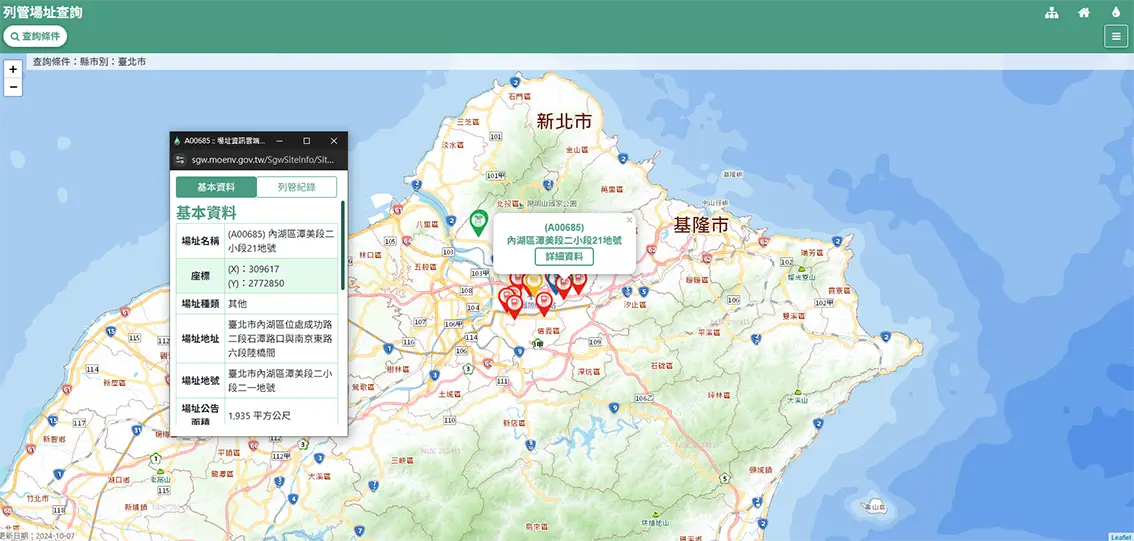
Go to the “Listed Site Search” feature on the Soil and Groundwater Pollution Remediation website. You can search by county or city, township or district, site type, site status, and pollutant type. You can also use your current location to check whether there are any contaminated sites nearby. For information on regulated pollutants, use the “Soil and Groundwater Pollution Standards and Sediment Quality Indicators” feature under Popular Services to view the pollutant types, concentration limits, and other information specified in the regulations.
Related Links: Soil and Groundwater Pollution Remediation Website
- Whether the land was previously used by highly polluting industries or officially announced businesses.
- Whether suspicious equipment, polluting raw materials or products, waste, pollutants, or obvious signs of contamination remain on site.
- Whether the land has been announced by environmental authorities as a contaminated site or required to undergo pollution remediation.
- Whether the land was previously designated by the central competent authority as land used by an announced business.
- Ask land administration agents, real estate agents or brokers, and nearby residents, or review relevant information.
- Background surveys and environmental monitoring records in environmental impact assessment reports.
- Entries in the land register and land-registration transcript, the current-condition statement for the real estate, and related materials.
- If concerns about pollution remain, commission a certified testing company to conduct testing.


- Data Source: Soil and Groundwater Pollution Remediation Fund Management Board
- Publish Date: 2024-11-28
- Update Date: 2026-09-14