
 Household waste
The administration is committed to improving the environment, focusing on "optimizing environmental protection facilities" and "transforming landfills" as core efforts. The primary aim is to enhance the efficiency of waste treatment facilities and revamp landfills. Since 2017, we have initiated various waste treatment programs and subsidized local governments to upgrade waste treatment facilities, with the goal of ensuring that household waste treatment capacity meets standards.
The administration continues to advance waste management strategies, upgrading facilities, promoting food waste recycling, introducing smart vehicles, and driving the green energy transition to enhance waste treatment efficiency and environmental sustainability.
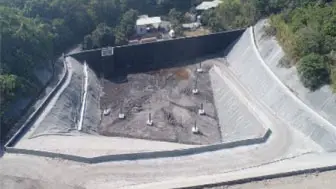
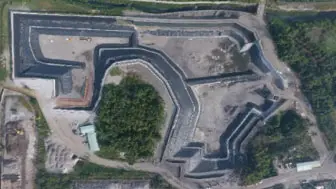
Incineration plants and landfills are key waste treatment facilities. The administration actively promotes smart operations to help local governments improve operational efficiency. By refurbishing outdated equipment and strengthening disaster prevention systems, facility safety and collection efficiency are ensured. Bottom ash and fly ash from incineration are no longer treated as waste but converted into recycled aggregates for public works, reducing landfill demand and promoting circular reuse.
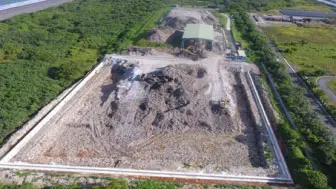
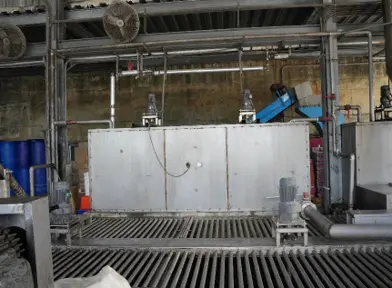
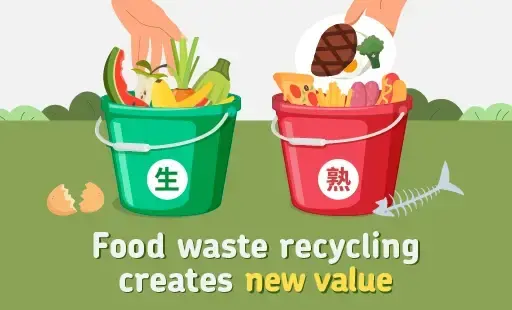
The administration's strategy for food waste management is "diversified reuse," promoting conversion into feed (e.g., pig farming), fertilizer (e.g., high-efficiency and traditional composting), energy (e.g., anaerobic digestion for power generation), and other uses (e.g., black soldier flies or poultry feed). Local governments are guided to adopt suitable reuse models based on local conditions.
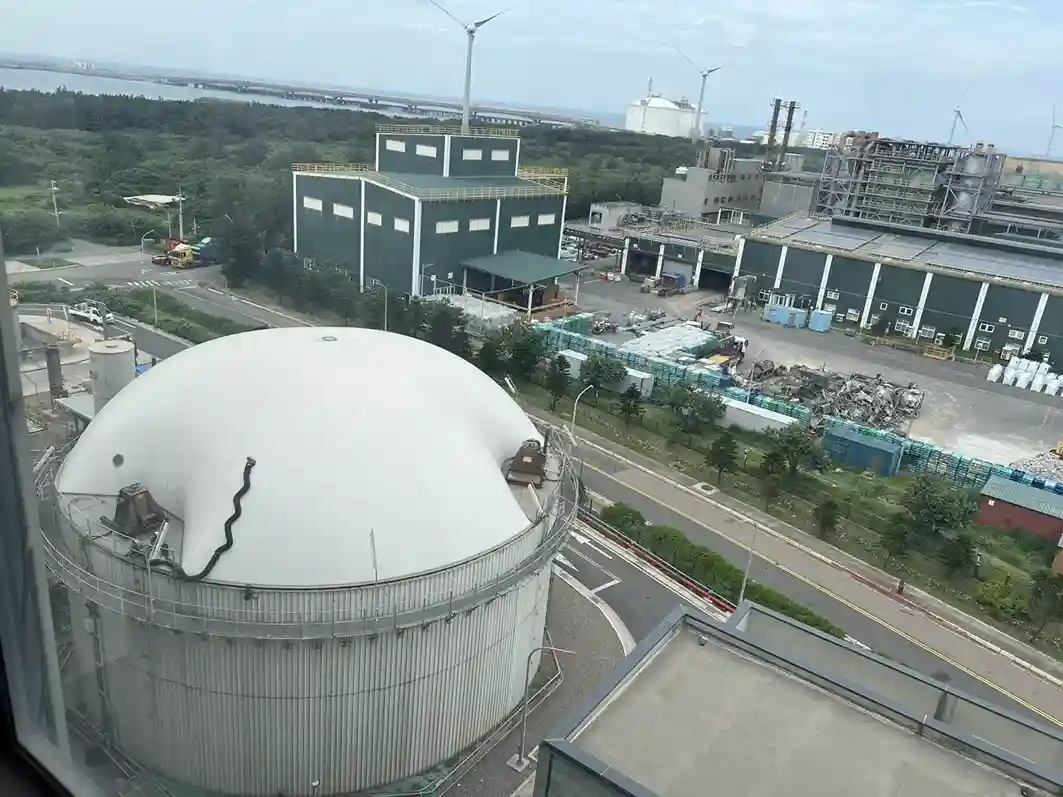
To drive the green transition while balancing ecological protection and land-use diversity, the administration has identified public environmental protection facilities with renewable potential to install solar photovoltaic systems on landfills, incineration plants, and sanitation team sites. This activates public land, provides renewable energy, and enhances both energy security and sustainability. The administration will continue identifying suitable sites to expand solar power deployment and accelerate progress toward net zero transformation.
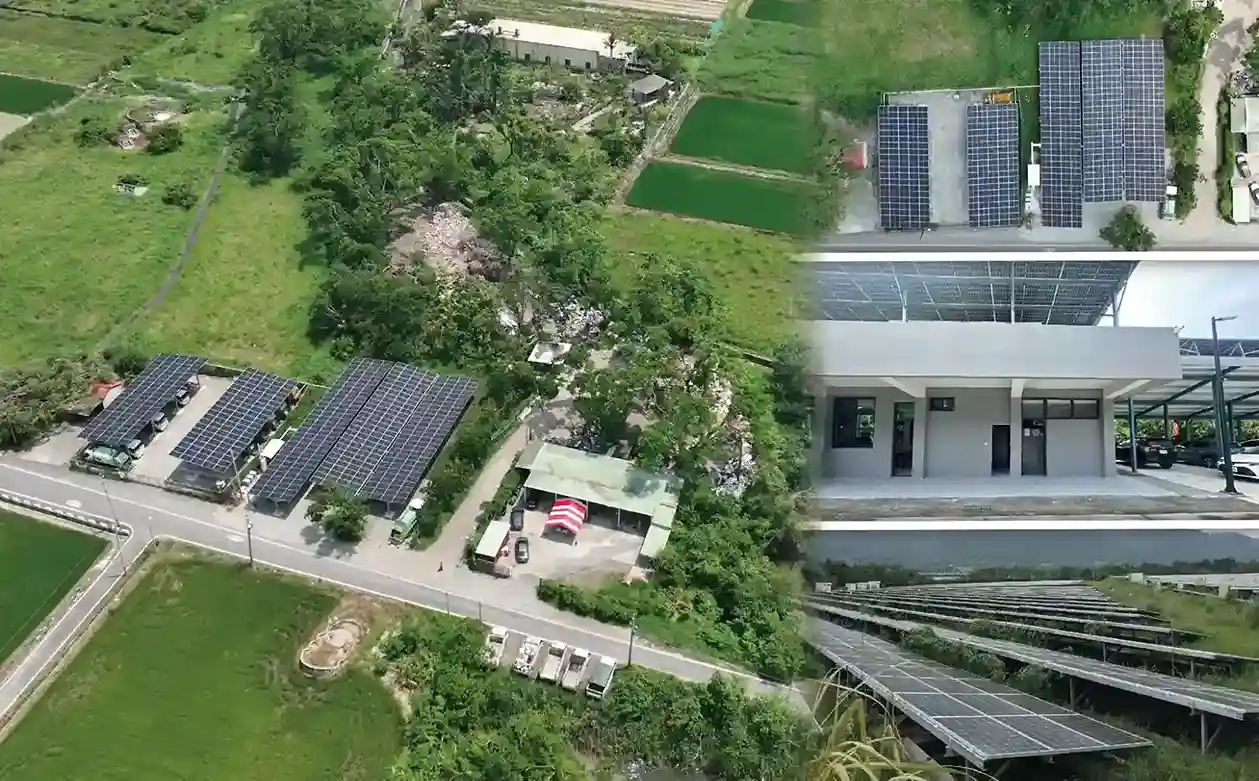
The administration will continue providing subsidies and collaboration projects to help local governments upgrade existing facilities, build new ones, and upgrade technologies. Through inter-agency coordination, regular exchanges, and professional oversight, resources will be integrated to establish locally adapted waste management models. Innovative technologies and management tools will be introduced to enhance disaster response and monitoring flexibility, improving overall governance efficiency. The long-term goal is a resilient, transparent, and efficient waste management system advancing resource circularity and net zero transformation.
- Incinerating combustible materials in waste reduces the volume to about one-tenth of the original amount. Bottom ash can then be recycled and reused, achieving waste reduction, stabilization, sanitation, and resource recovery.
- Waste-heat recovery boilers use the heat generated by combustion to produce electricity through turbine generators. This can supply power for the plant's own use, and surplus electricity can be sold to Taipower, enabling energy reuse and reducing energy waste.
- To effectively manage the types of waste entering general waste incineration plants, entry inspection measures are implemented under the "Management Regulations for Waste Entering General Waste Incineration Plants."
- These regulations specify the types of waste that are prohibited from entering incineration plants and require visual inspections, unloading inspections, and corresponding inspection frequencies. They also regulate the handling procedures for when vehicles are found carrying prohibited waste, requiring registration and tracking. The goal is to create a rigorous management mechanism that deters violations and controls the entry of waste unsuitable for incineration.
- The types of waste prohibited from entering incineration plants include hazardous industrial waste, non-combustible waste, waste unsuitable for incineration, and sorted recyclables.
- When local governments contract out incineration plant operations, they commission third-party oversight consultants under contract to carry out oversight duties.
- Environmental protection bureaus/departments, as the competent authorities for environmental protection, conduct inspections and impose penalties in accordance with environmental regulations.
- Incineration plants are subject to Ministry of Environment inspections and evaluations under the "Guidelines for Ministry of Environment Inspection and Evaluation of Waste-to-Resource Recovery (Thermal Treatment) Plants". They are also required to submit operational data through the ministry’s "Solid Waste Incinerator Management System (SWIMS)."



- Data Source: Division of General Waste Management
- Publish Date: 2024-08-27
- Update Date: 2026-08-07