
 Related Topics
 Reduction at the Source
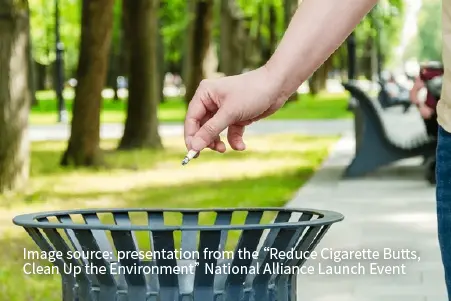
Cigarette butts generated by smokers create visual blight when littered on streets and harm aquatic ecosystems when discarded into drains.
Cigarette butts are classified as general waste and should be disposed of in trash cans.
Through environmental education, net-zero green lifestyle campaigns, and other outreach channels, in collaboration with local environmental protection agencies, the government promotes public awareness of the hazards of cigarette butts and encourages smokers to dispose of them in trash cans.
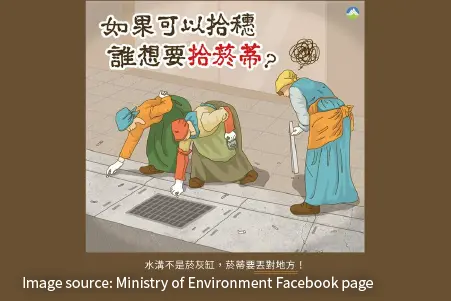
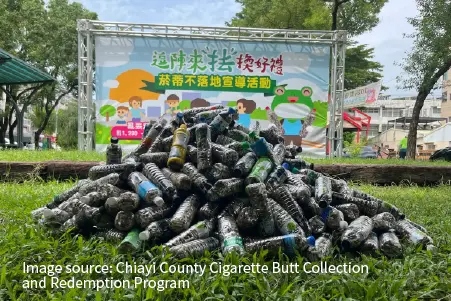
Tobacco products are the leading threat to public health in Taiwan. Prolonged exposure to smoking environments not only harms adolescents' health but also makes them more likely to develop smoking habits, which may further affect their future physical, psychological, and social development.
To protect children and adolescents from the harms of tobacco and from environments polluted by cigarette butts, youth representatives have been invited to serve as Cigarette Butts Off the Ground Advocacy Ambassadors. Individuals with social influence have also been invited to take on this role.
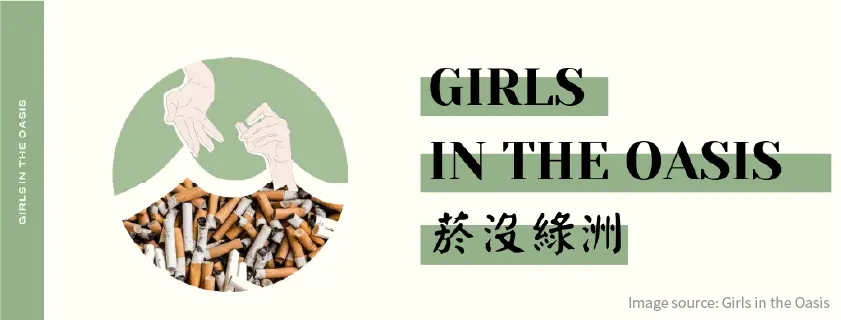
Students from Taipei First Girls High School voluntarily established "Girls in the Oasis," an organization dedicated to reducing cigarette butt pollution. Through activities such as student-led street cleanup campaigns and the design of a two-in-one environmentally friendly cigarette case, they hope to create an "oasis no longer submerged by cigarette butts."
Pursuant to Article 18, Paragraph 2 of the Tobacco Hazards Prevention Act, places where smoking is prohibited under Paragraph 1 must display prominent no-smoking signs at all entrances and may not provide articles related to smoking. In addition, Article 19, Paragraph 2 of the same Act provides that smoking is prohibited in all areas of the designated venues except in smoking areas. Where no smoking area is provided, smoking is completely prohibited, and smoking-related articles may not be supplied outside designated smoking areas. Article 8 of the Enforcement Rules of the Act defines smoking-related articles as items used to collect residues generated from the use of tobacco products. Therefore, cigarette butt receptacles may only be installed in areas that are not designated by law or official announcement as non-smoking areas.
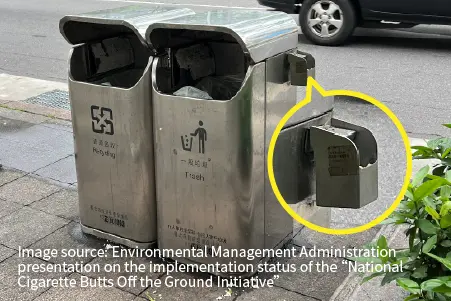
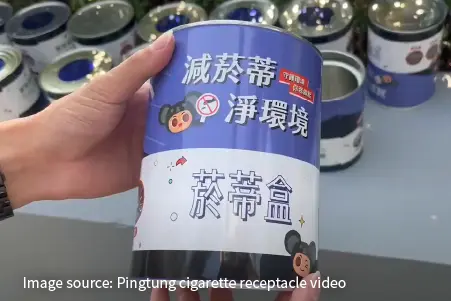
The Ministry of Environment has developed the "Guidelines for Promoting the Installation of Cigarette Butt Receptacles (PDF)." Local governments may coordinate with businesses to install receptacles in hotspots and other appropriate locations, encourage neighborhood communities to assess and install receptacles in suitable areas, and have environmental protection agencies or sanitation teams install and regularly clean receptacles where appropriate. These measures help maintain clean streets, and implementation results are incorporated into local government performance evaluations.
Clarify the authorities responsible for drainage systems and work with those authorities to explore innovative storm drain designs that incorporate devices capable of filtering and removing cigarette butts and litter. Pilot installations may be implemented in cigarette butt hotspot areas to capture cigarette butts and waste.
The Ministry of Environment provides funding to local governments to design, install, and evaluate pilot projects. If proven effective, the installations may be promoted nationwide.
Evaluate policies requiring manufacturers and retailers to assume responsibility for cigarette butt collection, environmental cleanup, and environmentally friendly products.
In accordance with the principle of Extended Producer Responsibility (EPR), producers' responsibilities should extend throughout the entire product life cycle, including the impacts generated at every stage of that cycle. In particular, the costs associated with waste collection, reuse, recycling, and final disposal should not be borne by society or government.
Information is being collected on international legislation that imposes extended social responsibility on cigarette manufacturers, and the feasibility of designating cigarette butts as regulated recyclable waste is being assessed.
Evaluate the feasibility of designating cigarette butts as regulated recyclable waste and imposing recycling, collection, and treatment fees to support environmental cleaning costs. If voluntary efforts by cigarette manufacturers to prevent cigarette butt littering and to conduct cigarette butt collection and treatment prove ineffective, legal and regulatory procedures may be initiated as appropriate.
The Ministry of Environment is promoting the "National Cigarette Butts Off the Ground Program" mainly through six major strategies and 21+N measures: "Changing Culture," "Source Reduction," "Inspection and Enforcement," "Environmental Cleanup," "Public-Private Cooperation," and "Strengthening Research." The aim is to keep our living environment clean and healthy and our ecological environment clean and sustainable.
The effort begins with cultural change, with the hope that smokers will develop good habits at the source: fully extinguishing cigarettes, not smoking while walking, and throwing cigarette butts into trash cans. Change is promoted by shaping social norms, encouraging mutual reminders, and working together in practice.
Taiwan's tobacco product sales in 2025 were about 36.5 billion sticks. If one-quarter of cigarette butts are littered, more than 9.1 billion cigarette butts may enter the environment each year. Discarded cigarette butts consist of three parts: residual tobacco, filters, and paper wrappers. Filters are made of cellulose acetate, a durable artificial plastic that does not biodegrade after being discarded in the environment and may take 10 years or longer to break down. Residual tobacco contains more than 7,000 harmful chemicals, including nicotine, arsenic, lead, copper, chromium, cadmium, and polycyclic aromatic hydrocarbons. The chemical mixture released contains toxic and carcinogenic substances. When these substances enter soil, water bodies, lakes, and oceans, toxins leach from cigarette butts, affecting the environment and marine ecosystems. Research has also shown that smoked cigarette butts and nicotine leachate can be lethal to fish. One cigarette butt in one liter of water can kill half the fish, allowing toxins to enter the food chain and harm both the environment and public health.
When cigarette butts are carelessly discarded, they can travel through drains or storm sewers, then through waterways and rivers to beaches or the ocean. They pollute the environment and are sometimes eaten by seabirds or marine mammals, posing an ecological threat comparable to plastic waste.
Cigarette butt litter remains common in daily environments, affecting city appearance and environmental quality while continuing to harm rivers, oceans, and ecosystems.


- Data Source: Division of Environmental Sanitation
- Publish Date: 2026-08-13
- Update Date: 2026-08-14