
 Technological enforcement enhances cross-sector joint defense! EMA convenes “North Region Prosecutor-Police-Environmental Conference,” deploying AI geofencing and exposing thousand-ton illegal landfill case
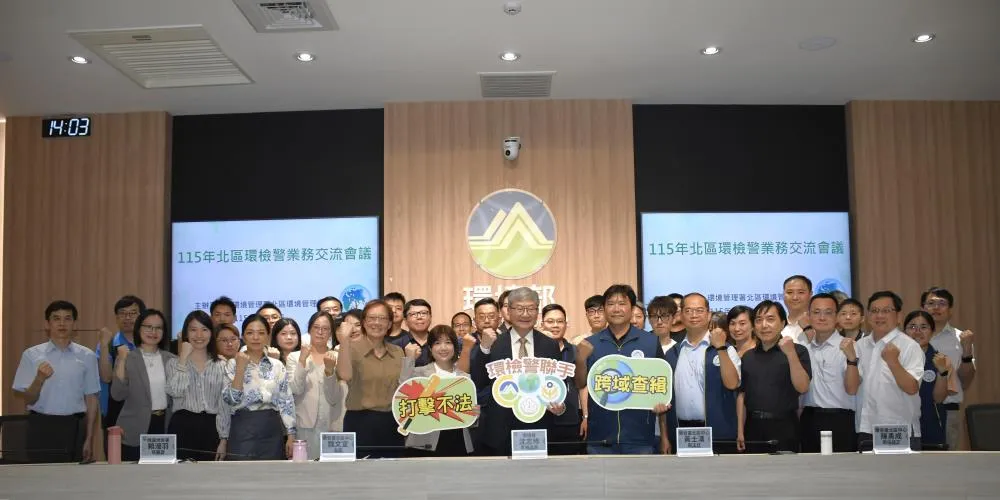
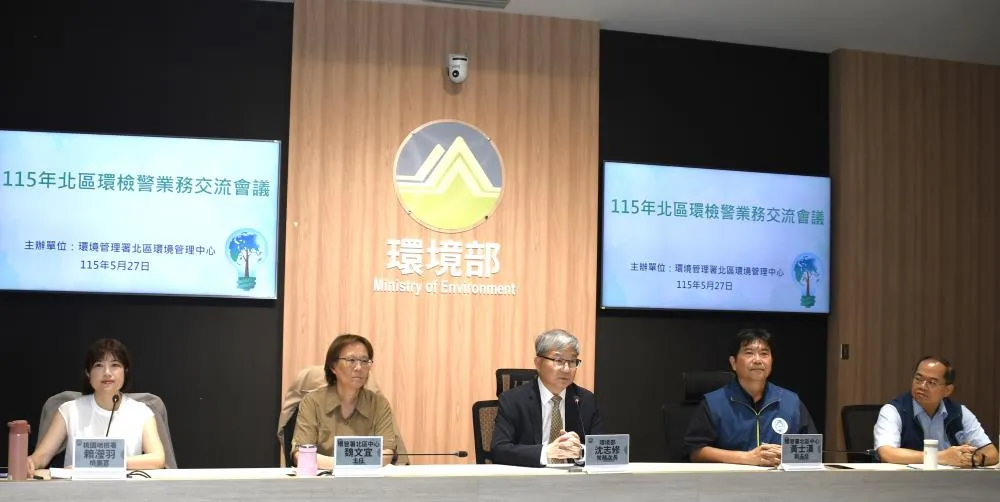
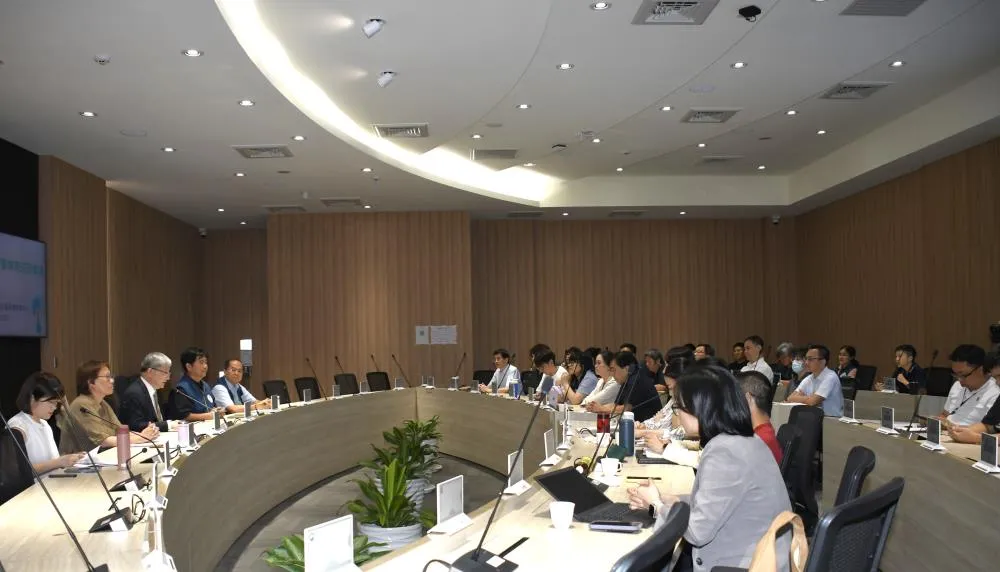
To demonstrate the government’s determination to defend environmental justice and punish criminals, the Northern Center of Environmental Management of the Environmental Management Administration (EMA), Ministry of Environment (MOENV), convened the “2026 North Region Prosecutor-Police-Environmental Affairs Exchange Conference” at 1:30 p.m. on May 27 at the MOENV Rear Building Conference Center. The meeting comprehensively expanded the scale of joint regional crackdown efforts, gathering core personnel from local prosecutors’ offices of nine counties and cities in northern Taiwan, environmental protection agencies, the Seventh Special Police Corps of the National Police Agency under the Ministry of the Interior, and the EMA. The parties conducted in-depth discussions on emerging types of environmental crimes and technological law enforcement applications, shared cross-departmental information, and worked together to build a tighter and more deterrent line of defense for safeguarding national territory.
A major focus of this conference was the attendance of Prosecutor Lai Ying-yu from the Taiwan Taoyuan District Prosecutors Office as a speaker to share a judicial case that shocked the industry: “Revealing a Chemical Company’s Long-Buried Secret: The Case of Illegal Landfilling of Thousands of Tons of Waste in a Factory’s Raft Foundation.”
During the conference, Prosecutor Lai analyzed the latest trend of environmental crimes becoming organized and concealed. She detailed how, through the tripartite collaboration among prosecutors, police, and environmental protection agencies — from front-end technological big data inspections, precise evidence collection and application, and back-end judicial prosecution — the agencies successfully uncovered a chemical company’s malicious concealment of thousands of tons of waste deep inside its factory building. The case not only demonstrated law enforcement agencies’ meticulous investigative strategies but also highlighted the critical efficacy of cross-departmental intelligence sharing in striking a heavy blow against environmental crimes.
To counter increasingly sophisticated criminal methods, smart technology has become a powerful means to protect the environment. At the conference, the EMA shared the national “Waste Dumping Smart Fencing” system that it is actively planning to build. The advantages of this technological defense include:
- Precise early-warning system for waste clearance and transport: by sharing how AI geofencing is applied in illegal disposal cases, the system provides law enforcement personnel from prosecutors, police, and environmental protection agencies with the most forward-looking early warning prompts for disposal cases.
- National dynamic monitoring: the EMA plans to build a national network, comprehensively expanding the coverage of technological monitoring over high-risk areas.
- Consolidating cross-sector coordination: the technological transformation of innovative law enforcement tools effectively strengthens coordination among prosecutors, police, and environmental protection agencies at the practical execution level.
MOENV Deputy Minister Shen Chih-hsiu, Acting Director General of the EMA, emphasized at the conference that environmental crimes not only severely damage ecosystems but also cause irreversible harm to national land security and public health. The government has absolutely zero tolerance for such crimes.
Going forward, the “prosecutor-police-environmental cooperation platform” will continue to deepen its development, combining big data analysis and digital forensics technology to crack down on environmental crimes. The government will continue to strictly enforce the law and promote regulations to build a precise environmental protection system where people dare not, cannot, and do not want to commit offenses, defending national land justice and leaving a clean environment for future generations.
- Data Source: Environmental Management Administration
- Publish Date: 2026-05-27
- Update Date: 2026-06-22