
 Central and local governments join forces for dengue fever breeding-site clearance — no standing water, no dengue fever!
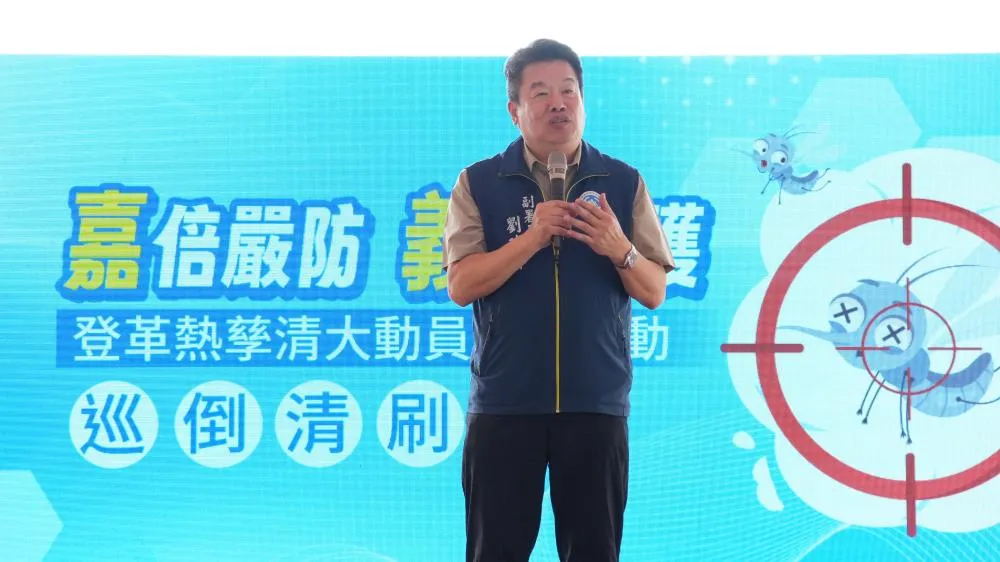
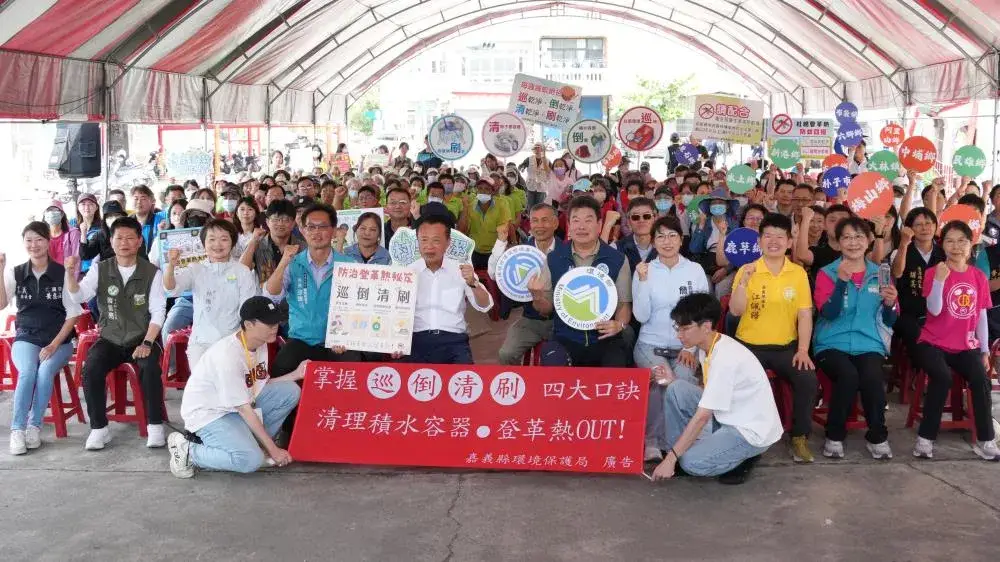
In response to World Earth Day, the Environmental Management Administration (EMA) of the Ministry of Environment and the Chiayi County Government held the "Double Vigilance, Joint Protection — Dengue Fever Breeding Site Clearance Rally" on the morning of April 22 at Yuanshan Temple in Lucao Township, Chiayi County. The event focused on the four fundamental dengue prevention steps: "inspect, empty, clean, and scrub." It also demonstrated the application of high-altitude drone inspection technology. Through cooperation between the central and local governments, the event aimed to embed dengue prevention awareness in township communities and encourage the public to implement source management and autonomous community epidemic prevention.
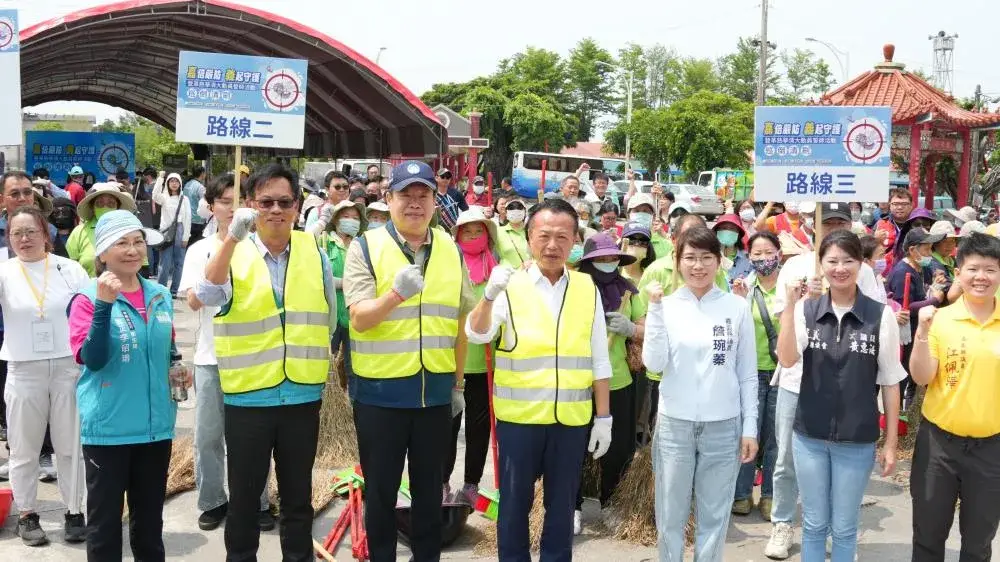
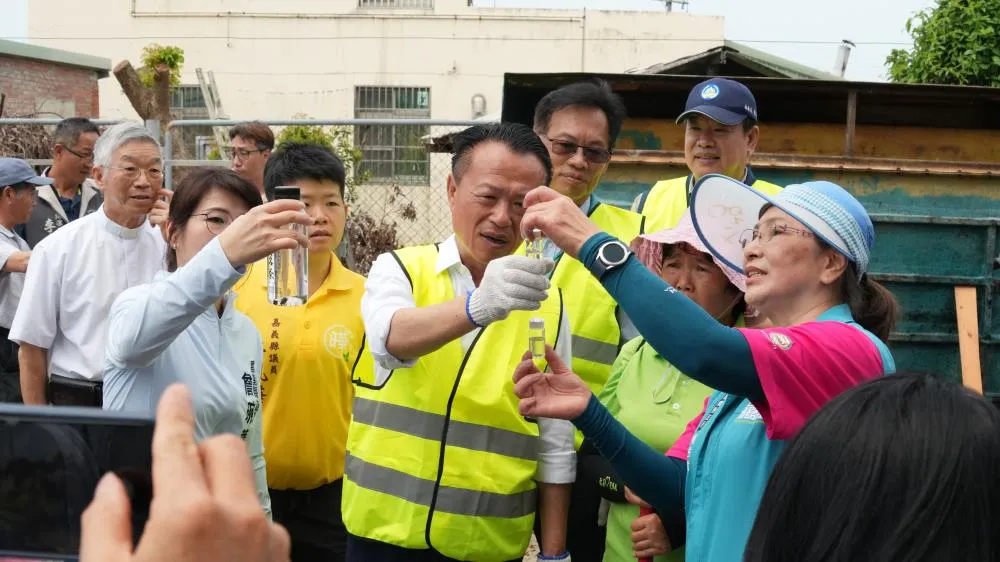
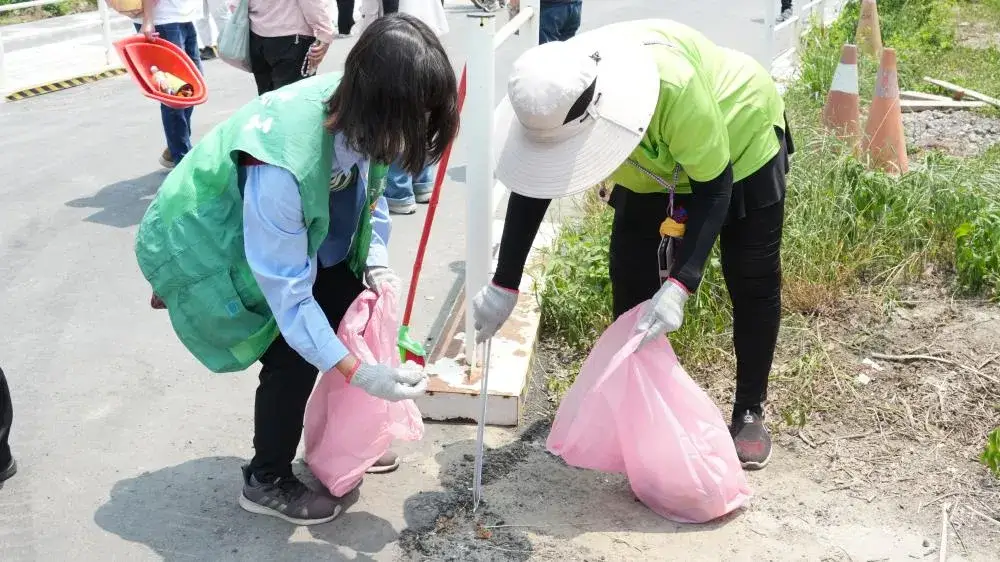
During the event, EMA Deputy Director General Liu Jui-Hsiang and Magistrate Weng Chang-liang led participants in practical breeding site removal. Centered on Yuanshan Temple, they demonstrated how to conduct environmental inspections, strengthening public awareness and vigilance regarding "inspect, empty, clean, and scrub" through action. Chiayi County Environmental Protection Bureau Director Chang Hui-Chuan explained how dengue inspections are carried out and displayed epidemic prevention equipment, including various disinfection machines and drones, showing how technology and professional tools can improve prevention effectiveness. Various forms of standing water were introduced so participants could see and learn directly. The event moved "from rally to action, from demonstration to public implementation," with "prevention over cure" as its core objective, strengthening the ability of villages and local communities to launch dengue prevention and environmental cleanup efforts.
Deputy Director General Liu Jui-Hsiang emphasized that this year's World Earth Day is dedicated to promoting a zero-carbon transition and climate justice. He also used the opportunity to encourage people to eat more plant-based foods to reduce carbon emissions and to use digital media to reduce paper waste. Daily environmental maintenance is also important; citizens should develop the habit of performing "inspect, empty, clean, and scrub" every week. "Without breeding sites, there are no disease-carrying mosquitoes," he said. Ahead of the upcoming rainy season, people should frequently "inspect" inside and outside their homes, paying attention to balconies, rooftops, basements, and other places where water easily accumulates; immediately "empty" standing water and invert containers to prevent them from collecting rain again; "clean" up discarded containers, such as tires, bottles, cans, and pot trays, sorting them properly before disposal; and "scrub" the inner walls of containers to thoroughly remove residual mosquito eggs and prevent them from hatching when they come into contact with water.
Waste and cigarette butts in the environment were another focus of the event. Microplastics left by cigarette butts cause deep and lasting ecological damage. If cigarette butts fall into drains and cause blockages, they can create hiding and breeding places for disease-carrying mosquitoes. Smokers are urged to implement the "Cigarette Butts Off the Ground" policy, and to put them in butt bins or trash cans only after they have been fully extinguished. This small action demonstrates high civic standards, keeps ditches and alleys clean, and helps realize the vision of "fewer cigarette butts, a cleaner environment."
The EMA called for nationwide participation, saying epidemic prevention is like a battle. Breeding sites should be thoroughly cleared through weekly "inspect, empty, clean, and scrub" routines. Citizens are also reminded to wear light-colored long pants and long sleeves when outdoors, use mosquito repellent, and stay away from dark areas and other places where outdoor Aedes mosquitoes are active. Implementing "no standing water means no larvae; no larvae means no dengue fever" can effectively block the transmission chain and protect community safety.
- Data Source: Environmental Management Administration
- Publish Date: 2026-04-22
- Update Date: 2026-06-15