
 Prevent dengue fever, block the northern migration and colonization of Aedes aegypti
The dengue fever vector, “Aedes aegypti,” is primarily distributed in areas south of Chiayi. However, in September 2024, the mosquito species was discovered to have expanded northward to Beigang Township, Yunlin County. Therefore, central and local environmental and health agencies are working together to conduct regular inspections for dengue fever breeding sites in Beigang Township to prevent Aedes aegypti from continuing its northern colonization, thereby reducing the potential risk of dengue fever and preventing the occurrence of indigenous dengue fever outbreaks.
- After the National Health Research Institutes notified the Yunlin County Government in September 2024 confirming the colonization of Aedes aegypti in the Beigang area, the administration’s Central Center of Environmental Management immediately joined the Beigang Township Office Sanitation Team on Oct. 9, 2024, to conduct dengue prevention inspections in Renhe Village and Donghua Village, Beigang Township, to block the continued northern spread of Aedes aegypti.
- Starting Dec. 10, 2024, the administration’s Central Center, in conjunction with the Southern Regional Control Center of the CDC, Ministry of Health and Welfare, the Yunlin County Environmental Protection Bureau, Public Health Bureau, the Beigang Township Public Health Office, and the Beigang Township Office Sanitation Team, began conducting joint inspections for Aedes aegypti prevention in Beigang Township, Yunlin County. The cooperation of environmental and health agencies ensured that there were no blind spots in the epidemic prevention work, not only stopping Aedes aegypti from breeding through the winter and thus reducing dengue fever risk, but also preventing indigenous dengue fever outbreaks.
- The administration’s Central Center of Environmental Management continues to work with the CDC’s Southern Regional Control Center and other agencies to conduct joint dengue fever prevention inspections one to two times per month in ten high-risk villages in Beigang Township (Renhe Village, Guangmin Village, Yimin Village, Zhonghe Village, Gongrong Village, Cifu Village, Donghua Village, Dongyang Village, Nan'an Village, and Xishi Village). Through the division of labor and cooperation between environmental and health agencies, outdoor and indoor breeding site inspections are conducted simultaneously, and meetings are held after each inspection to strengthen prevention effectiveness.
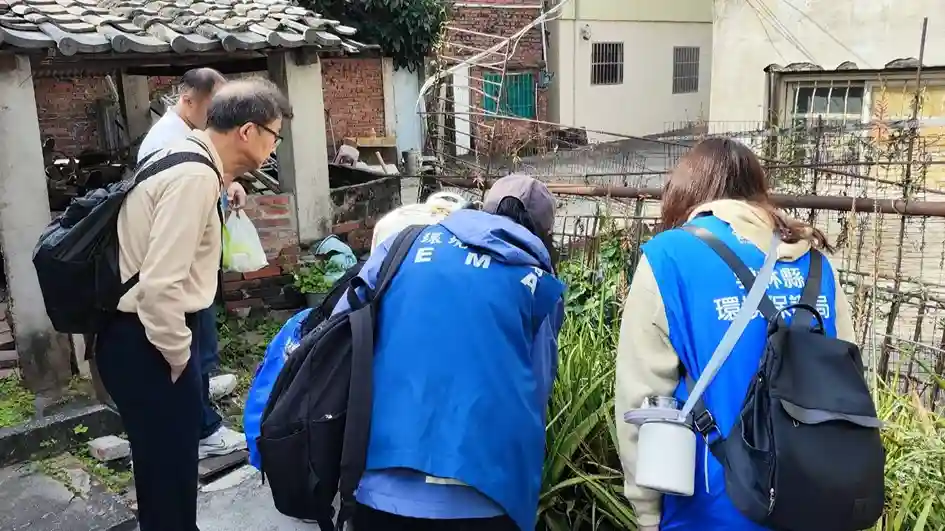
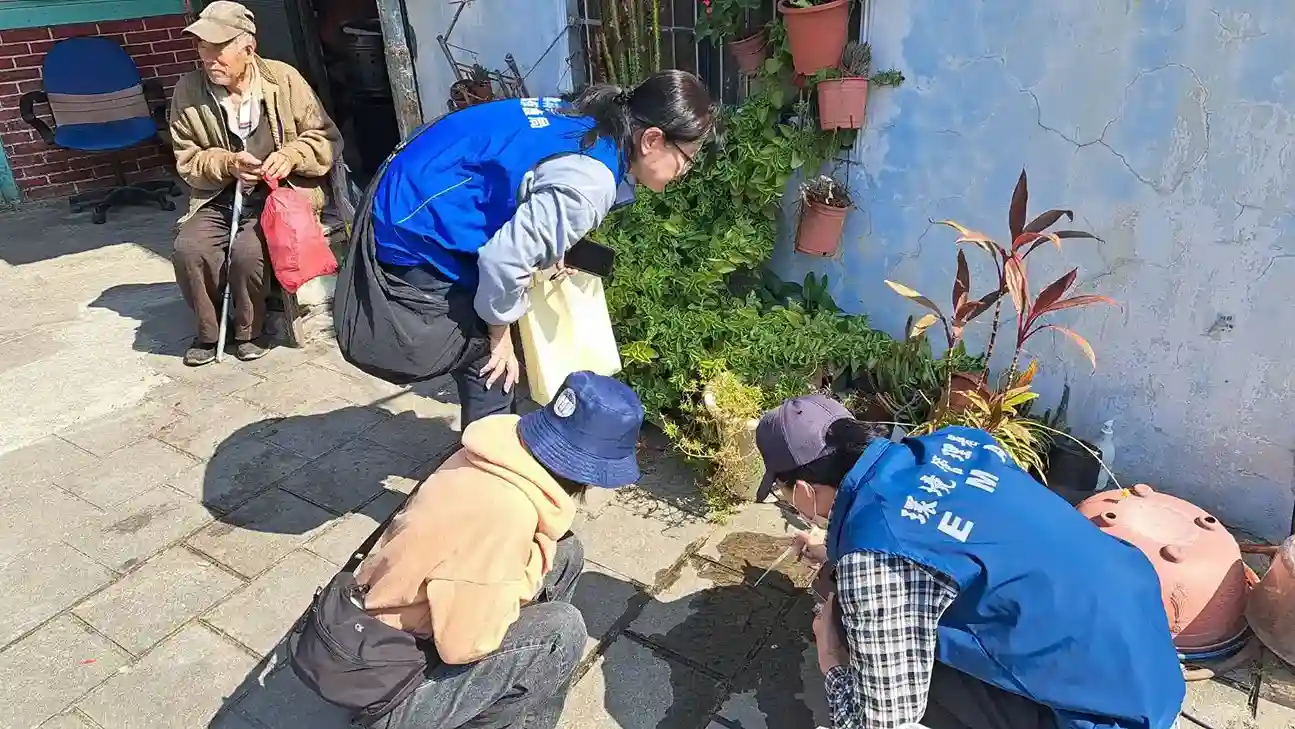
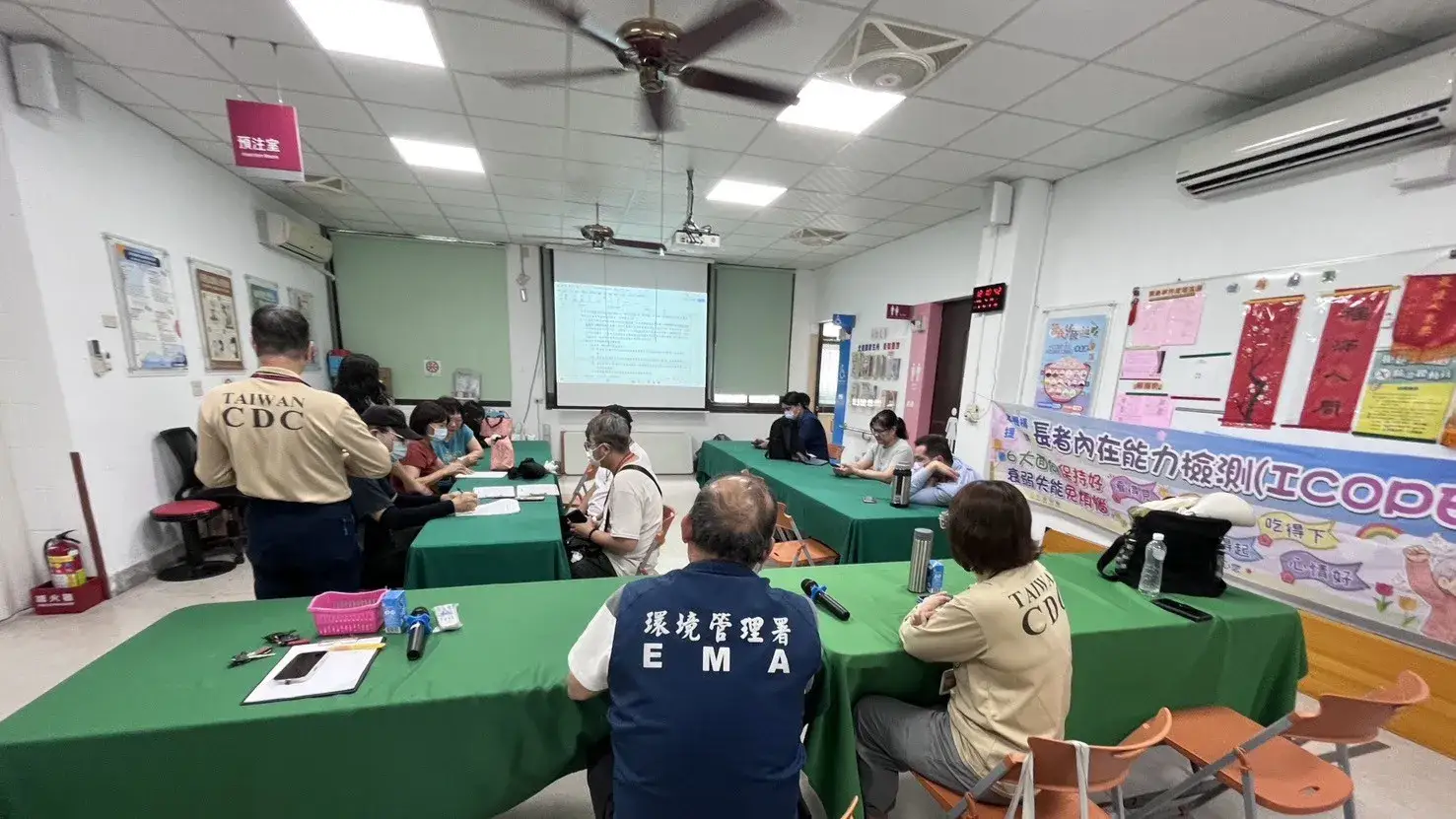
From Oct. 9, 2024, to May 27, 2026, the administration's Central Center, in conjunction with the Southern Regional Control Center of the CDC, Ministry of Health and Welfare, conducted the “Project for Dengue Fever Breeding Site Prevention and Inspection to Prevent Aedes aegypti Colonization in Beigang Township, Yunlin County.” A total of 34 inspections were conducted, with 208 people mobilized by central government agencies (the administration: 118 people; CDC: 90 people). In total, 275 positive containers were found (58 indoor, 217 outdoor), 4,176 larvae were found (842 indoor, 3,334 outdoor), 134 dirty sites were found, and one dirty site was reported, resulting in a fine of NT$1,200.
- Data Source: Central Center of Environmental Management
- Publish Date: 2026-06-02
- Update Date: 2026-07-14